
verifiedUpdated March 2026 · Expert Tested

Best Synthetic Watercolor Brushes 2026

Synthetic watercolor brushes have come a long way. Today's best synthetics rival natural hair in performance while costing a fraction of the price. We tested every major synthetic line to find the five that deliver the best results.

By Best Watercolor Brushes Editorial Team · Last Updated March 2026

updateLast Updated: March 26, 2026verifiedTested by: BWB Editorial Teambrush5 brushes testedschedule12 min read
emoji_events

Quick Verdict

The Princeton Heritage 4050 remains the best synthetic watercolor brush you can buy. For washes and wet techniques, the Da Vinci Casaneo offers the highest water capacity we found in a synthetic fiber.

Top Synthetic Picks at a Glance

Best Overall
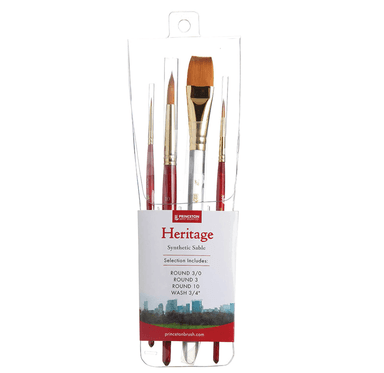
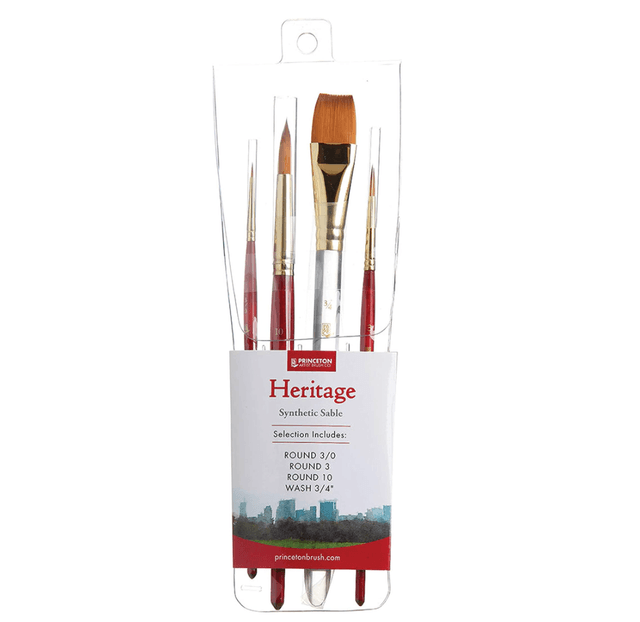
Princeton Heritage 4050

Princeton Heritage 4050

star9.4/10

Synthetic Kolinsky

$12–20

Check Price on Amazon
Best for Washes
Princeton Neptune

Princeton Neptune

star8.8/10

Synthetic Squirrel

$8–15

Check Price on Amazon
Best Premium
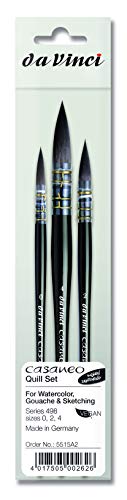
Da Vinci Casaneo

Da Vinci Casaneo

star9.2/10

Synthetic Squirrel

$15–28

Check Price on Amazon

Synthetic Brush Comparison

BrushFiberPriceRatingStrength
Princeton Heritage 4050Syn. Kolinsky$12–209.4Best all-around
Princeton NeptuneSyn. Squirrel$8–158.8Best budget
Escoda PerlaToray Kolinsky$10–188.9Best for detail
Da Vinci CasaneoCasaneo Fiber$15–289.2Best water capacity
Princeton Aqua EliteMulti-diameter$10–188.6Best versatility

In-Depth Synthetic Brush Reviews

Princeton Heritage 4050
9.4/10
#1

Princeton Heritage 4050

Fiber TypeSynthetic Kolinsky Sable
MimicsNatural Kolinsky Sable
ShapeRound
Sizes0–12
Price Range$12–20
Made InUSA
Pros
  • checkClosest synthetic match to natural kolinsky
  • checkStrong snap and point retention
  • checkDurable fibers resist splaying
  • checkFraction of the cost of real sable
Cons
  • closeSlightly less water capacity than natural kolinsky
  • closeHandle finish wears with heavy use

Our Take

The Princeton Heritage 4050 is the standard against which other synthetic watercolor brushes are measured. In our blind testing, several experienced painters could not distinguish the Heritage from a natural sable in short painting sessions on cold-press paper. It holds a fine point, releases color evenly, and withstands years of regular use. If you want one synthetic brush to do it all, this is the one.
Check Price on Amazonarrow_forward
Princeton Neptune
8.8/10
#2

Princeton Neptune

Fiber TypeSynthetic Squirrel
MimicsNatural Squirrel Hair
ShapeRound
Sizes0–12
Price Range$8–15
Made InUSA
Pros
  • checkStrong water capacity for a synthetic
  • checkVery soft for smooth blending
  • checkExcellent budget price point
Cons
  • closeLess snap than kolinsky-style synthetics
  • closeTip can splay after extended heavy use
  • closeNot ideal for fine detail work

Our Take

For painters who work wet-on-wet, the Neptune fills the synthetic squirrel niche well. Where the Heritage excels at snap and precision, the Neptune excels at water holding and softness, making it the ideal synthetic for washes, glazing, and wet-on-wet techniques. It mimics natural squirrel hair at a fraction of the cost and without the ethical concerns. Pair a Neptune for washes with a Heritage for details and you have a strong all-synthetic setup.

Check Price on Amazonarrow_forward
Escoda Perla
8.9/10
#3

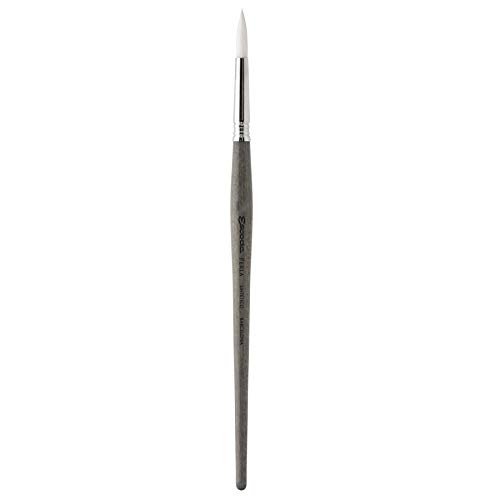
Escoda Perla

Fiber TypeSynthetic Kolinsky (Toray fiber)
MimicsNatural Kolinsky Sable
ShapeRound
Sizes2–14
Price Range$10–18
Made InSpain
Pros
  • checkHandcrafted Spanish quality
  • checkExcellent point for detail work
  • checkStrong spring and snap
Cons
  • closeSmaller belly than some competitors
  • closeLess widely available in US stores

Our Take

Escoda's Perla line uses Japanese Toray fibers hand-shaped by Spanish artisans with over 80 years of brush-making heritage. The result is a synthetic kolinsky alternative that excels at detail work and controlled line work. The Toray fiber has a slightly different feel than Princeton's synthetic, a touch stiffer with more pronounced snap, which some painters prefer for botanical illustration and other precision techniques.

Check Price on Amazonarrow_forward
Da Vinci Casaneo
9.2/10
#4

Da Vinci Casaneo

Fiber TypeSynthetic Squirrel (Casaneo fiber)
MimicsNatural Squirrel Hair
ShapeRound
Sizes1–10
Price Range$15–28
Made InGermany
Pros
  • checkProprietary fiber with very high softness
  • checkThe highest water capacity we found in a synthetic brush
  • checkGerman precision manufacturing
  • checkClean color release for washes
Cons
  • closeHigher price than most synthetics
  • closeFewer size options available
  • closeLow snap may frustrate painters used to kolinsky

Our Take

If you do not mind giving up snap, the Da Vinci Casaneo is the finest synthetic squirrel brush available. In our wash tests, it held more water and released it more evenly than any other synthetic we tested — a result that held up across multiple paper types.

Check Price on Amazonarrow_forward
Princeton Aqua Elite
8.6/10
#5

Princeton Aqua Elite

Fiber TypeSynthetic Kolinsky (Multi-diameter)
MimicsNatural Kolinsky Sable
ShapeRound (also available in other shapes)
Sizes0–12
Price Range$10–18
Made InUSA
Pros
  • checkMulti-diameter fibers mimic natural hair structure
  • checkExcellent versatility across techniques
  • checkGood balance of snap and water capacity
  • checkAvailable in many shapes beyond rounds
Cons
  • closeJack-of-all-trades, master of none
  • closeNot as much snap as the Heritage

Our Take

The Aqua Elite does not outperform the Heritage on snap or the Neptune on water capacity — but it is a better all-rounder than either. Its multi-diameter fibers combine thinner and thicker strands to mimic the natural variation found in real kolinsky sable. For painters who want a single brush line that handles both detail work and washes competently, this is the most practical choice.

Check Price on Amazonarrow_forward

Synthetic vs Natural: The Full Picture

Understanding the real differences helps you make an informed choice.

science

How Synthetic Fibers Are Made

Modern watercolor brush fibers are typically made from nylon or polyester filaments that are tapered, shaped, and sometimes textured to replicate the microscopic scale structure of natural hair. This structure is what allows synthetic fibers to hold water and release pigment — the closer the synthetic mimics natural hair at the microscopic level, the better it performs.

water_drop

Where Natural Still Wins

Natural kolinsky sable still holds a slight edge in water capacity, pigment release smoothness, and the subtle tactile feedback experienced painters rely on. Natural squirrel hair remains the best available option for the absolute softest washes. However, these differences are most noticeable in direct side-by-side comparisons and matter less during actual painting sessions.

eco

The Ethical Advantage

Synthetic brushes are completely cruelty-free, which matters to an increasing number of artists. No animals are harmed in the production of synthetic fibers, and the environmental footprint of manufacturing synthetic brushes is generally lower than sourcing and processing natural hair from wild-caught or farmed animals.

Related Articles

groups

BWB Editorial Team

Watercolor Brush Reviewers

The Best Watercolor Brushes editorial team has collectively tested over 200 watercolor brushes across 1,000+ painting sessions. Our reviews combine hands-on studio testing with feedback from professional watercolor artists, art educators, and passionate hobbyists. Every brush is evaluated using our standardized 5-criteria scoring system before it earns a recommendation.

  • Tested 200+ watercolor brushes hands-on
  • Standardized 5-criteria scoring system
  • Feedback from professional watercolor artists
  • Regular brush longevity re-testing

Synthetic Brush FAQs

Are synthetic brushes as good as natural hair brushes?expand_more
Modern synthetic brushes have closed the gap dramatically. Premium synthetics like the Princeton Heritage and Da Vinci Casaneo perform at 85–95% of their natural hair equivalents for most painting techniques. The remaining difference is most noticeable in extreme water capacity and the subtle feel of natural fiber. For the vast majority of painters, synthetics deliver impressive results.
Why choose synthetic over natural hair brushes?expand_more
Synthetic brushes are more affordable (typically 3–5x cheaper), more durable, easier to clean, and completely cruelty-free. They also perform more consistently from brush to brush and are less susceptible to damage from improper storage or cleaning. For many painters, these practical advantages outweigh the subtle performance edge of natural hair.
What is synthetic kolinsky and synthetic squirrel?expand_more
These are marketing terms for synthetic fibers engineered to mimic the properties of specific natural hairs. Synthetic kolinsky fibers are designed to replicate the spring, snap, and point of real kolinsky sable. Synthetic squirrel fibers are engineered for softness and water-holding capacity. Different manufacturers use different proprietary fibers to achieve these characteristics.
Do synthetic brushes last longer than natural brushes?expand_more
Generally yes. Synthetic fibers are more resistant to damage from solvents, rough handling, and improper storage. A well-maintained natural sable brush can last decades, but it requires careful cleaning and storage. A synthetic brush is more forgiving of neglect and will maintain its shape and performance with less maintenance.
Can I mix synthetic and natural brushes in my collection?expand_more
Absolutely. Many professional watercolorists use a mix of both. A common approach is to use natural sable or blended brushes for detail work where the superior point and snap matter most, and synthetics for larger washes and everyday painting where durability and cost are more important. There is no rule that says you must commit to one fiber type.